




Custom Canopy Tents With Sidewalls: Benefits, Uses, and Buying Tips

Custom canopy tents with sidewalls provide additional shade, weather coverage, privacy, and branding space compared with open canopy tents. They are particularly useful for businesses that need a more defined event space, additional printed graphics, or protection from side-angle sunlight and light rain.
However, not every event needs sidewalls. Whether they make sense depends on your event environment, how you use the tent, and how open or enclosed you want the space to feel. This guide explains the main benefits of sidewalls, when they are useful, and what to consider before ordering a custom canopy tent with sidewalls.
Why Add Sidewalls to a Custom Canopy Tent?
Better Protection From Sun and Outdoor Weather
Sidewalls can reduce side-angle sunlight and provide additional coverage from wind and light rain that an open canopy cannot offer. They can make the space underneath the tent more comfortable and usable in changing outdoor conditions.
For businesses attending outdoor events throughout the day, sidewalls can be particularly useful when the direction of sunlight changes or when additional coverage is needed for staff, products, and equipment.
However, the amount of protection depends on the weather, wall coverage, fabric, and overall tent structure. Sidewalls also increase the surface area exposed to wind, which can place additional loads on the frame and anchoring system.
Always follow the manufacturer's anchoring and weather guidelines, as well as venue safety requirements. Sidewalls do not make a pop-up canopy suitable for severe weather conditions.
Create a More Defined Event Space
Adding walls turns an open canopy into a more clearly defined area. This can help separate a display area, reception space, staff area, rest area, or storage space from the surrounding event.
For trade shows and promotional events, a tent with sidewalls can also create a more complete and intentional booth appearance. Rather than functioning only as an overhead shelter, the canopy becomes a temporary space designed around the needs of the business.
Increase Branding Opportunities
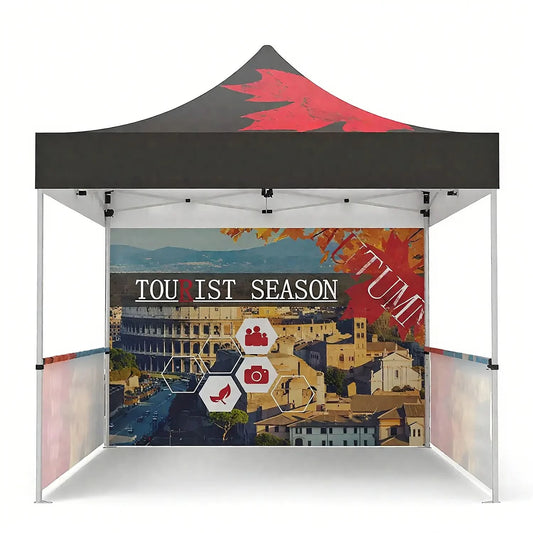
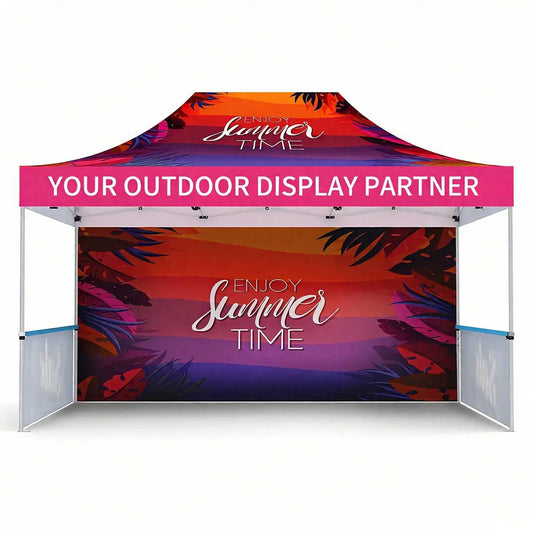
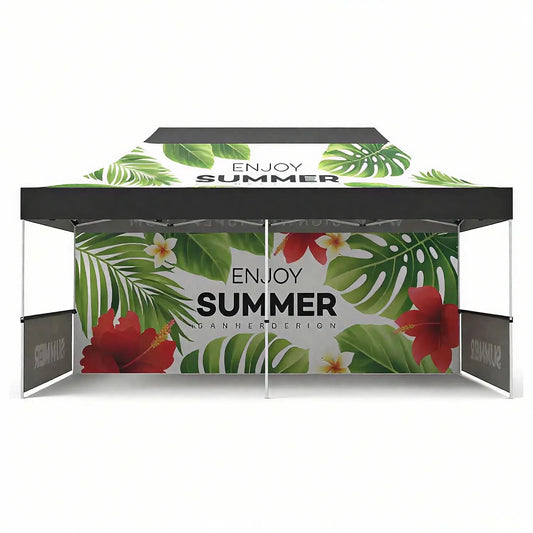
Sidewalls add printable surface area beyond the canopy roof and valance. Logos, company names, product graphics, promotional messages, and brand colors can be displayed on large vertical surfaces.
This can be especially useful at outdoor events where people may approach your tent from different directions. Instead of relying only on the roof or front-facing branding, sidewalls give you additional areas to communicate your brand.
A printed sidewall can also serve as a branded backdrop for product displays, customer interactions, team photos, and promotional activities.
For more information about using roof panels, valances, and sidewalls together, see our Custom Canopy Tent Logo Placement Guide.
Add Privacy and Hide Equipment
Sidewalls can screen inventory, boxes, equipment, and personal items from view. This helps keep the space underneath the tent looking more organized and can create a more private working area for staff.
For businesses carrying products or equipment, additional wall coverage can provide useful visual separation between customer-facing areas and operational spaces.
However, fabric sidewalls are not a substitute for secure storage or appropriate supervision of valuable items.
When Are Custom Canopy Tents With Sidewalls Most Useful?
Trade Shows and Promotional Events
Sidewalls can create a more complete branded space while providing additional surfaces for logos, product imagery, and promotional graphics. They are useful when the goal is to make a temporary booth look more like a dedicated brand environment.
They can also help visually separate your booth from nearby exhibitors and make your branded space easier to recognize from different directions.
For businesses using custom trade show tents, printed sidewalls can complement the roof branding and create a coordinated visual presentation.
Outdoor Markets and Vendor Events
Sidewalls can provide additional shade, help screen inventory and equipment, and give a vendor setup a more organized appearance.
They can also provide additional space for product graphics, business logos, and information that helps customers identify the vendor.
For markets held in hot weather, the amount of wall coverage should be balanced with the need for airflow and customer access.
Sports Events and Team Activities
Sidewalls can help define a covered area for athletes, coaches, staff, and equipment. They can also provide additional space for team logos, school colors, mascots, and sponsor branding.
For sports events, the right amount of wall coverage depends on whether the priority is branding, athlete rest space, equipment storage, or additional shade and weather coverage.
Corporate and Community Events
Sidewalls can help define registration areas, information booths, promotional spaces, and temporary staff areas at outdoor corporate and community events.
They can also make a temporary setup look more organized without requiring a permanent structure. Printed walls can reinforce company branding and help identify the purpose of the event space.
Food and Beverage Events
Sidewalls can help separate service and storage areas, screen equipment and inventory from view, and create a more finished appearance for a food vendor setup.
Depending on the application, a vendor may prefer a more open setup for ventilation and customer access rather than enclosing the entire tent.
Food vendors should also consider any applicable venue requirements for ventilation, food preparation, fire safety, and tent materials before selecting their wall coverage.
When You May Not Need Sidewalls
Although sidewalls offer several benefits, an open canopy may be the more practical choice for certain events.
Mild Weather and Short Events
If conditions are stable and your main requirement is overhead shade, an open canopy may be all you need.
For short events where customers need to approach the tent from multiple directions, keeping the sides open can also make the setup simpler.
When Maximum Airflow Is Important
In hot weather, airflow can be more important than additional enclosure. An open canopy allows air to move more freely through the space.
If you need some additional coverage but still want good ventilation, limiting the amount of solid wall coverage can provide a practical balance.
When Easy Access Is the Priority
If customers, athletes, staff, or event visitors need to enter from multiple directions, too much wall coverage can restrict natural movement.
Consider how people will approach the tent before deciding how much of the structure should be enclosed.
When Portability and Setup Time Matter
Additional sidewalls mean more fabric to transport, install, remove, and store. For businesses that frequently move between locations or only need a simple branded shelter, fewer walls may make transportation and setup easier.
If the canopy roof and valance already provide sufficient branding, additional printed walls may not be necessary for every event.
Custom Canopy Tents With Sidewalls vs. Without Sidewalls
The main difference between the two setups is how they balance coverage, branding, privacy, airflow, and accessibility.
| Factor | With Sidewalls | Without Sidewalls |
|---|---|---|
| Sun Protection | Additional coverage from side-angle sunlight | Primarily overhead shade |
| Weather Coverage | Additional side coverage from light rain and wind | Limited side coverage |
| Branding Space | Roof, valances, and printable sidewalls | Roof and valances |
| Privacy | Additional visual separation, depending on wall coverage | Minimal visual separation |
| Airflow | Depends on wall material and coverage | More open natural ventilation |
| Customer Access | Depends on wall and entrance placement | Access from multiple directions |
| Wind Exposure | Solid walls can increase wind loads | Less vertical fabric exposed to wind |
| Setup and Transportation | Additional components to install and transport | Fewer components to handle |
| Initial Cost | Generally higher due to additional walls and printing | Generally lower for an otherwise comparable tent |
| Best For | Branded booths, additional coverage, privacy, and defined event spaces | Open layouts, basic shade, easy access, and simple event setups |
Neither setup is universally better. The right choice depends on whether the additional functionality and branding space provided by sidewalls are valuable to your business.
Are Printed Sidewalls Worth the Additional Cost?
Printed sidewalls can be worth the additional investment when a custom canopy tent is regularly used for brand promotion, product displays, trade shows, or customer-facing events.
Unlike plain sidewalls, custom printed walls provide both functional coverage and additional branding space. They can display product imagery, company logos, sponsor information, and other graphics that may not fit comfortably on the canopy roof or valance.
The value of printed sidewalls depends on several factors:
- How frequently the tent will be used
- Whether customers can see the printed wall surfaces
- How much additional branding space the business needs
- Whether the walls serve a practical purpose beyond branding
- The additional cost of fabric, printing, and wall construction
For businesses that attend events regularly, reusable printed sidewalls can provide additional branding opportunities across multiple events. For occasional use where overhead shade is the main requirement, the additional investment may not be necessary.
Single-Sided or Double-Sided Printed Sidewalls?
Single-sided printing is generally suitable when branding only needs to be visible from one direction. Double-sided printing can be useful when both the inside and outside of the canopy are visible to customers or event visitors.
At Pyrasun, double-sided printed sidewalls can be constructed using two separately printed fabric layers sewn together. This allows each side to display its own logos, colors, or graphics. The additional material and manufacturing work generally increase the weight and cost of the finished wall.
For a detailed explanation of available wall types, configurations, and double-sided wall construction, see our Custom Canopy Tent Sidewall Options Guide.
You can also learn more about fabric compatibility and printing methods in our Custom Canopy Tent Printing Guide.
How to Decide If You Need Sidewalls
Consider Your Event Environment
Think about whether your events are indoors or outdoors and what type of sun, wind, rain, and temperature conditions the tent is likely to face.
An outdoor market in strong sun may benefit from additional side coverage, while a hot-weather event may require a more open setup for ventilation.
Consider Your Main Purpose
Think about what you actually need the walls to accomplish. Branding, customer reception, product display, equipment storage, privacy, and additional weather coverage can all influence whether sidewalls are worth adding.
Consider Your Branding Needs
Decide how much printable area you need and from which directions customers are likely to see your tent.
If the main goal is to create a branded backdrop, limited wall coverage may be enough. If your tent needs to function as a highly visible branded booth, additional printed wall space can create more opportunities for graphics.
Consider Privacy and Storage
If you need to hide boxes, inventory, equipment, or staff areas, sidewalls can provide useful visual separation.
Think about what needs to remain visible to customers and what should stay behind the wall.
Consider Access and Ventilation
Plan where customers and staff will enter the tent and whether you need access from more than one direction.
Also consider airflow, especially for outdoor events in warm climates. More enclosure can reduce natural ventilation, so the amount of wall coverage should match the environment.
Consider Budget and Frequency of Use
Sidewalls add material, printing, and manufacturing costs to a custom canopy tent. Evaluate whether the additional functionality will be useful at most of your events or only occasionally.
If your event requirements change throughout the year, removable sidewalls may provide greater flexibility by allowing you to use the canopy with or without walls as needed.
Check Venue and Safety Requirements
Before ordering, confirm the venue's permitted footprint, safety rules, anchoring requirements, and any restrictions on tent walls, entrances, or fabric materials.
This is especially important for trade shows, public events, food vendor applications, and outdoor venues with specific installation requirements.
Custom Canopy Tent Sidewall Buying Checklist
Before ordering sidewalls for your custom canopy tent, review the following considerations:
- Confirm your tent size and frame compatibility.
- Evaluate your typical event environment and weather conditions.
- Identify how much additional shade or privacy you need.
- Determine whether additional printed branding is necessary.
- Decide whether graphics need to be visible from one or both sides.
- Plan customer entrances and staff access.
- Consider ventilation and airflow.
- Evaluate transportation, setup, and storage requirements.
- Confirm wall attachment methods and fabric compatibility.
- Check manufacturer and venue anchoring requirements.
- Compare the additional cost with your expected frequency of use.
Once you have determined why you need sidewalls, the next step is choosing the appropriate wall types and layout. Our Custom Canopy Tent Sidewall Configuration Guide compares backwalls, half-walls, full walls, mesh walls, clear PVC walls, and other custom options in detail.
Frequently Asked Questions
Do I Need Sidewalls for My Custom Canopy Tent?
Not necessarily. Sidewalls are useful when you need additional shade, weather coverage, privacy, branding space, or a more defined event area. If your main priorities are overhead shade, maximum airflow, easy access, and simple setup, an open canopy may be sufficient.
Are Canopy Tents With Sidewalls Worth the Extra Cost?
Yes, when the sidewalls provide functionality or branding space that your business regularly needs. Printed sidewalls can be particularly valuable for trade shows, outdoor markets, promotional events, and other customer-facing applications. For occasional events that only require basic shade, the additional cost may not be necessary.
Do Canopy Sidewalls Provide Better Weather Protection?
Sidewalls can provide additional coverage from side-angle sunlight, wind, and light rain. However, they also increase the surface area exposed to wind and do not automatically improve the structural wind resistance of the tent. Proper anchoring and compliance with the manufacturer's weather guidelines remain essential.
Do Canopy Sidewalls Reduce Airflow?
Yes. Solid sidewalls can reduce natural airflow, especially when multiple sides of the canopy are enclosed. Limiting solid wall coverage or using suitable mesh walls can help maintain ventilation while providing additional functionality.
Can I Add Sidewalls to My Canopy Tent Later?
Yes, provided the sidewalls are compatible with the existing canopy tent. Check the tent dimensions, frame design, wall attachment system, and fabric requirements before ordering additional walls. For custom printed walls, matching the existing branding and colors should also be considered.
Final Thoughts
Custom canopy tents with sidewalls can provide additional shade, weather coverage, privacy, branding space, and a more defined event area. They can be especially useful for businesses that regularly attend outdoor markets, trade shows, sports events, and promotional events.
However, more walls are not always better. If maximum airflow, easy access, portability, and an open layout are more important, fewer walls or an open canopy may be more practical.
The best approach is to determine what you need the sidewalls to accomplish before choosing how many walls to add. Selecting wall coverage based on your actual event requirements helps create a more functional, cost-effective, and professionally branded canopy tent.
Get a Free Custom Canopy Tent Design & Quote
Share your logo and project details. Get a free 3D design preview and a personalized quote for your branded canopy tent.