




Custom Aluminum Canopy Tent Frames: Benefits, Features, and Applications

Custom canopy tents are widely used for trade shows, promotions, outdoor events, and brand activations. Of everything that goes into one, the frame is one of the most important components affecting durability, portability, and overall performance — it's what determines whether the tent holds up to years of regular use or starts to feel unstable after a few seasons.
Aluminum canopy tent frames are a popular choice for businesses that need lightweight, professional, and reliable event solutions. This guide covers what makes aluminum a strong frame material, the features worth checking before you order, and how to choose the right custom aluminum canopy tent frame for your business.
What Are Custom Aluminum Canopy Tent Frames?
An aluminum canopy tent frame is the structural skeleton of a pop-up canopy tent — the legs, trusses, and connectors — built from aluminum rather than steel. It's what the fabric top attaches to, and it's what folds down for transport and pops back up at the next event.
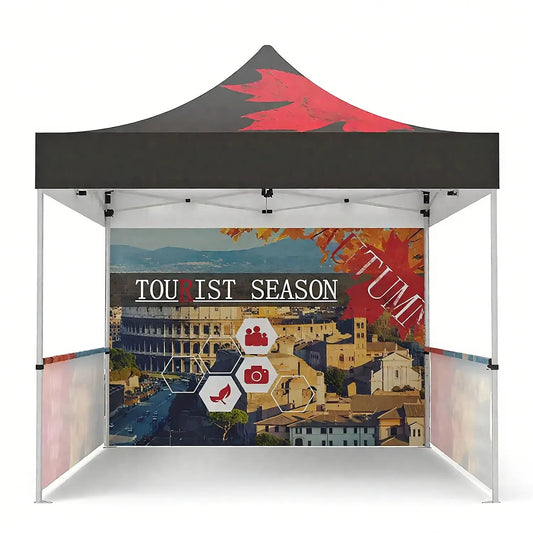
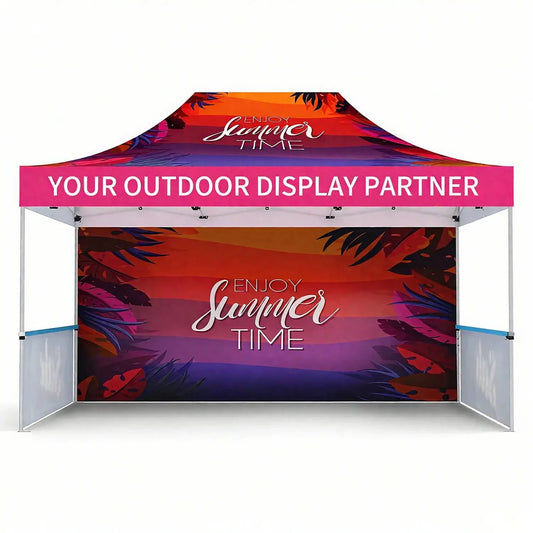
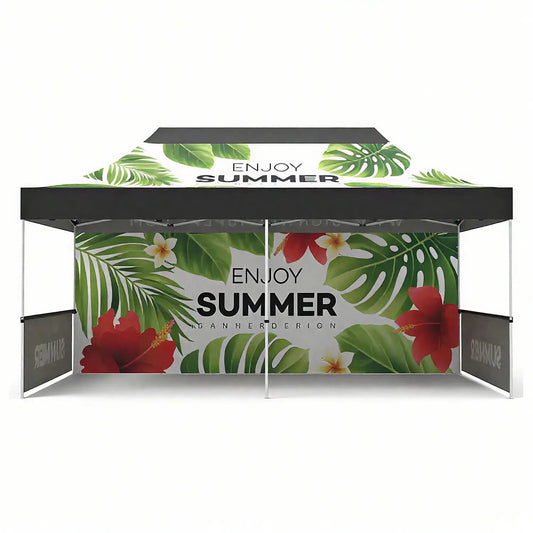
Business customers pay close attention to frame material because it drives nearly everything else about the tent's real-world performance: how much it weighs, how it holds up outdoors over time, and how easy it is for a small team to set up and break down at every event on the calendar. A custom aluminum frame is built in a folding pop-up design from an aluminum alloy selected for its balance of strength, flexibility, and finish quality, and it's compatible with the standard canopy sizes most businesses use: 10x10, 10x15, and 10x20.
Explore our custom pop up tents to see the full range of sizes and configurations available with an aluminum frame.
Key Benefits of Aluminum Canopy Tent Frames
Lightweight Design for Easy Transportation and Setup
Aluminum is generally lighter than steel, which makes transportation and setup easier for teams attending multiple events. That matters most for trade show exhibitors, event companies, and marketing teams who load, unload, and carry the same tent from one venue to the next throughout the year.
Durable Structure for Frequent Commercial Use
A well-built aluminum frame is designed to withstand frequent setup and teardown, which makes it a dependable choice for businesses that use their canopy regularly at trade shows, markets, and other commercial events. Quality varies between manufacturers, so it's worth asking about the frame's construction rather than assuming all aluminum frames perform the same way.
Corrosion Resistance for Outdoor Applications
Aluminum naturally forms a protective oxide layer that keeps it from developing the red rust steel does, which keeps maintenance simple for most outdoor use. It isn't fully immune to corrosion, though — coastal salt spray or acid rain can cause pitting over time, and direct contact between aluminum and stainless steel hardware in damp conditions can cause corrosion at that connection point, which is why quality frames use coatings or insulating washers there. With that in mind, aluminum still holds up well for outdoor exhibitions, sports events, and festivals.
Premium Appearance for Professional Branding
Aluminum frames are typically finished with an anodized or powder coating, giving the metal a clean, scratch-resistant finish without the paint layer that can chip and peel on steel. For brand-facing setups like product launches, corporate events, and brand activations, a frame that still looks sharp after a season of use reflects better on the brand than one showing wear.
Aluminum vs Steel Canopy Tent Frames: Understanding the Differences
| Feature | Aluminum Frame | Steel Frame |
|---|---|---|
| Weight | Lightweight | Heavier |
| Portability | Easier transport | More effort required |
| Outdoor use | Excellent corrosion resistance | Requires protective coating |
| Cost | Higher investment | More budget-friendly |
| Best for | Frequent events | Cost-focused projects |
For a full side-by-side breakdown — including wall thickness, lifespan, and long-term value — see our complete steel vs aluminum canopy tent frames comparison.
Common Applications of Aluminum Canopy Tent Frames
Trade Shows and Exhibitions
Frequent setup and teardown across different venues, plus a professional appearance, make aluminum a common choice for exhibitors showing up at a different show every month. Explore our trade shows & exhibitions pop up canopy tents for setups built around this use case.
Brand Activations and Promotional Events
Product demonstrations, customer engagement, and marketing campaigns all benefit from a tent that's easy for a small team to move from one activation to the next. Explore our brand activations & promotions pop up canopy tents collection for setups built around this use case.
Sports and Outdoor Events
Quick setup between games or heats and dependable performance outdoors make aluminum a practical choice for sidelines, tournaments, and outdoor sporting events. Explore our sports & outdoor event pop up canopy tents for setups built around this use case.
Outdoor Dining and Semi-Fixed Shade
Restaurants, cafes, and venues that keep a canopy in place for an extended season also benefit from a frame that needs less upkeep over time than one that requires repainting or rust treatment.
How to Choose the Right Aluminum Canopy Tent Frame
The best aluminum frame depends on your event frequency, tent size, transportation needs, and expected outdoor conditions.
Consider the Tent Size
Aluminum frames are available across our standard sizes — 10x10, 10x15, and 10x20 — and the right one depends on expected visitor volume, display requirements, and available event space. See our size guides for each to compare in more detail.
Check Frame Structure and Profile Design
Aluminum frames commonly come in a square profile or a hexagonal (hex) profile. A hex aluminum frame generally offers better stability and is positioned as the premium option. It's also worth asking whether the frame uses standardized tubing — many use standardized 40mm or 50mm hex tubing, which makes replacement parts easier to source if a component ever needs replacing. Connectors are typically the first part of a frame to show wear, so joint quality is worth checking as closely as the tubing itself.
Pay Attention to Tube Thickness and Material Quality
Aluminum quality varies noticeably between manufacturers, and tube thickness affects rigidity and durability as much as the alloy itself. A reasonable reference point is 1.4mm–1.8mm for aluminum tube thickness on a commercial-grade frame — ask your supplier for the actual spec rather than judging quality from product photos alone.
Match the Frame With Your Event Frequency
For occasional use, a standard aluminum option is generally enough. For businesses running a full event calendar — multiple trade shows, activations, or sporting events a year — a premium aluminum frame tends to be the better long-term investment. As a rule of thumb: a one-off market stall is usually well served by steel, while brand events, rental fleets, and semi-permanent setups tend to justify the aluminum investment.
Why Choose Pyrasun Custom Aluminum Canopy Tent Frames?
Pyrasun manufactures custom aluminum canopy tent frames direct from the factory, with custom sizes, custom printing, and a free 3D mockup design before production begins. Bulk orders are supported, and every aluminum frame comes with a 5-year parts replacement warranty, so components can be replaced individually rather than requiring a full tent replacement if something wears out.
Frequently Asked Questions
Is an aluminum canopy tent frame worth the extra cost over steel?
For businesses that transport and set up their tent frequently, yes — the lighter weight, corrosion resistance, and longer typical lifespan often offset the higher upfront cost over a few seasons of use. For occasional, budget-conscious use, a steel frame can still be the more practical choice.
How long does an aluminum canopy tent frame last?
A well-built aluminum canopy tent frame can last for many years with proper use and maintenance. Actual lifespan depends on frame quality, climate, and how often it's set up and packed down, so it varies from one business to another.
Is aluminum better for frequent events?
Generally, yes. Its lighter weight makes repeated loading, transport, and setup less demanding on a team, and it holds up well to the wear that comes with frequent use. For a tent that's set up once or twice a year, the advantage matters less, and steel can be the more cost-effective choice.
Do aluminum canopy tent frames rust?
Aluminum does not rust like steel, making it a lower-maintenance option for frequent outdoor use. However, coastal environments and prolonged exposure to moisture can still affect the frame over time.
What's the difference between a square and hex aluminum frame?
A hex (hexagonal) profile generally offers better stability than a square profile and is typically positioned as the premium option, though overall performance also depends on wall thickness and connector quality.
Can I get a custom size aluminum canopy tent frame?
Yes. Pyrasun offers custom aluminum canopy tents across standard sizes — 10x10, 10x15, and 10x20 — with custom printing and a free 3D mockup before production.