




Custom Canopy Tent Frame Comparison: Steel vs Aluminum

Quick Answer: Steel and aluminum canopy tent frames each offer different advantages. Steel frames are generally more affordable and provide high structural rigidity, while aluminum frames are typically 20–40% lighter and offer better corrosion resistance for frequent transportation and outdoor use. Aluminum frames usually cost 30–80% more than comparable steel frames, but their lighter weight and longer typical service life can make them a worthwhile investment for businesses that attend frequent events. The right choice depends on your budget, usage frequency, transportation needs, and operating environment.
Steel vs Aluminum Canopy Tent Frames at a Glance
Steel and aluminum are two common materials used in commercial canopy tent frames. The following table compares their typical characteristics, including weight, strength, price, lifespan, and portability.
| Comparison | Steel (Powder-Coated / Galvanized) | Aluminum 6061 |
|---|---|---|
| Weight | Heavier frame construction | Typically 20–40% lighter than comparable steel frames |
| Rust Resistance | Requires protective coating. Scratches, chipped paint, and exposed weld areas can develop rust, especially in humid or coastal environments. | Naturally forms a protective oxide layer and offers excellent corrosion resistance. Anodized finishes provide additional surface protection. |
| Strength & Wind Resistance | High structural rigidity and good resistance to bending, depending on tube dimensions and frame design. | High strength-to-weight ratio. Tube thickness and structural design are important for preventing excessive bending. Wind resistance depends on the complete frame, connectors, canopy, and anchoring system. |
| Purchase Price | Generally lower upfront cost and suitable for tighter budgets. | Typically 30–80% more than comparable steel frames, depending on alloy, wall thickness, and construction. |
| Lifespan | Typical estimated service life is 2–3 years under indoor or light-rain use, potentially decreasing to 1–2 years with frequent outdoor rain exposure and inadequate maintenance. | Typical estimated service life is 5–10 years with regular outdoor use and proper care. |
| Transport & Folding | Heavier and requires more effort to load, carry, and transport. Corrosion at joints can make folding more difficult over time. | Lightweight and convenient for frequent transportation, setup, teardown, and trade show applications. |
| Repair After Damage | Some minor bends may be repairable by qualified technicians, although welding or straightening can affect structural integrity and protective coatings. | Severely bent aluminum tubing is generally better replaced than straightened because repair can weaken or crack the material. |
| Weld Point Performance | Weld quality and coating coverage matter. Exposed weld areas can become corrosion points if protective finishing is damaged. | Aluminum requires specialized welding processes. Joint construction, weld quality, and connection design should be checked when comparing frames. |
| Repeated Folding Fatigue | Repeated use can wear protective coatings and contribute to corrosion at moving joints if maintenance is inadequate. | Resists rust-related joint stiffness, although moving components and connections still require inspection and maintenance. |
| Cold Weather Performance | Maintains useful structural properties in typical cold-weather applications. | Also performs well in typical cold-weather applications. Plastic connectors and accessories on either frame type may require additional attention in low temperatures. |
| Appearance | Usually features a painted or galvanized finish. Scratches and coating wear may expose the underlying steel. | Often features a clean metallic or anodized finish. Surface wear may occur, but the material does not develop iron rust. |
| Thermal Expansion | Generally expands and contracts less than aluminum under the same temperature change. | Expands and contracts more with temperature changes. Proper joint clearances and frame design accommodate normal movement. |
| Accessory Compatibility | Replacement parts and accessories depend on manufacturer-specific tube dimensions, hole spacing, and connection designs. | Some manufacturers use common 40mm or 50mm hexagonal tubing profiles. Compatibility still depends on the specific frame system and connection dimensions. |
| Snow Load | Steel's rigidity alone does not establish a snow-load rating. The complete structure must be designed and rated for the intended conditions. | Aluminum frames also require an appropriate structural rating. Snow accumulation should be addressed according to manufacturer instructions. |
| Surface Damage Consequences | Damage to paint or protective coating can expose steel to moisture and corrosion. Regular inspection helps prevent deterioration. | Surface scratches do not cause iron rust, although dents and deeper damage can still affect structural integrity. |
| Flex Characteristics | Steel has a higher elastic modulus and generally feels more rigid than aluminum with comparable geometry. | Aluminum generally flexes more under the same geometry and load. Proper wall thickness and frame engineering are important for controlling deflection. |
Note: The weight and price percentages and service-life ranges above are general comparison estimates, not guaranteed specifications for every canopy tent. Actual results depend on tent size, tube dimensions, material grade, surface treatment, manufacturing quality, usage frequency, climate, and maintenance. Compare products with similar dimensions and configurations for a meaningful evaluation.
Key Takeaways
- A canopy tent frame should never be judged by material alone. Wall thickness, tube profile, frame geometry, connection design, and anchoring all affect real-world performance.
- Steel frames: A practical choice for budget-conscious projects, indoor applications, and setups where transportation weight is less important.
- Aluminum 6061 frames: A strong option for trade shows, frequent setup and teardown, and businesses that prioritize lightweight transportation and corrosion resistance.
- A severely bent aluminum pole is generally better replaced than repaired. Steel components may be repairable in some situations, but corrosion protection must also be restored.
Steel Frame Canopy Tents: Strength and Heavy-Duty Performance
What Is a Steel Frame Canopy Tent?
A steel frame canopy tent uses steel tubing for the legs, trusses, and connectors that make up the tent structure. Steel has long been used in commercial tent manufacturing because of its structural rigidity and relatively low material cost. It can be a practical choice for businesses that need a sturdy frame without the higher upfront cost of an aluminum system.
Advantages of Steel Frames
- High structural rigidity — steel tubing provides good resistance to bending when properly sized and engineered.
- Cost efficiency — steel frames generally have a lower upfront material cost than comparable aluminum frames.
- Substantial frame construction — the additional weight can be useful for certain applications where frequent transportation is not a priority.
- Repair options — some steel components can be repaired by qualified technicians, depending on the type and extent of damage.
- Multiple frame configurations — steel can be manufactured in different tube profiles and structural designs for different commercial applications.
Limitations of Steel Frames
- Heavier construction — requires more effort to lift, carry, and load.
- More demanding transportation — additional weight can be inconvenient for mobile teams and frequent event travel.
- Corrosion risk — scratches, chipped coatings, and exposed weld areas can develop rust when exposed to moisture.
- Maintenance requirements — protective coatings and joints should be inspected regularly, especially in humid or coastal environments.
- Less convenient for frequent relocation — heavier frames may require more staff effort during repeated setup and teardown.
Aluminum Frame Canopy Tents: Lightweight and Portable
What Is an Aluminum Frame Canopy Tent?
An aluminum frame canopy tent uses aluminum tubing instead of steel for its structural components. Aluminum has a lower density than steel, which makes it particularly useful for frames designed around transportation and frequent setup. It is commonly selected for trade show booths, mobile marketing teams, and businesses that reuse the same tent across multiple events.
Advantages of Aluminum Frames
- Lightweight construction — significantly easier to lift and carry than comparable steel frames.
- Easier transportation — reduces the weight that teams need to move between events.
- Convenient setup — a lighter frame can make assembly and disassembly less physically demanding.
- Excellent corrosion resistance — aluminum naturally forms a protective oxide layer that helps resist corrosion.
- Suitable for frequent events — useful for businesses that regularly transport, assemble, and dismantle their tents.
- Professional appearance — anodized finishes can provide a clean, consistent metallic appearance for branded displays.
Limitations of Aluminum Frames
- Higher upfront cost — aluminum framing typically costs more than comparable steel construction.
- Tube design matters — lightweight construction still needs adequate wall thickness and structural engineering to handle expected loads.
- Impact damage — severe dents or bending can compromise a tube and may require component replacement.
- Anchoring remains essential — a lightweight frame is not inherently wind-resistant. Proper anchoring is necessary for outdoor use.
Steel vs Aluminum Canopy Tent: Why the Differences Matter
The comparison table shows the main differences between the two materials. The following factors explain how those differences affect daily business use and long-term ownership.
Why Weight Translates Into Real Labor Cost
The weight difference between steel and aluminum becomes more noticeable over a full event season. A team that repeatedly loads, unloads, carries, and assembles a heavier steel frame may spend more physical effort on each event. For small crews handling back-to-back setups, aluminum's lower weight can make transportation and handling more convenient.
For businesses attending frequent trade shows, markets, and promotional events, this can be an important operational advantage.
Why Wall Thickness Matters More Than the Material Name
Material alone does not determine frame strength. Tube geometry, wall thickness, cross-sectional shape, and connection design all affect bending resistance and overall structural performance.
As a general comparison reference, steel canopy tent tubing commonly uses wall thicknesses of approximately 0.8–1.2mm, while aluminum tubing commonly uses approximately 1.4–1.8mm. Aluminum frames often use thicker walls to help achieve the required structural performance while maintaining a lower overall weight.
A thin-walled aluminum frame may underperform a well-designed steel frame, while a properly engineered aluminum frame can provide an effective balance of strength and portability. Buyers should compare actual tube dimensions and specifications rather than choosing based on the material name alone.
Why Aluminum's Corrosion Resistance Matters
Steel relies on protective coatings, such as powder coating or galvanizing, to reduce exposure to moisture. If the coating is damaged, exposed steel can begin to corrode, particularly around joints and weld points.
Aluminum naturally develops a thin oxide layer that helps protect the material from further corrosion. Anodized aluminum provides an additional protective surface treatment. This makes aluminum a useful choice for businesses that regularly use their tents outdoors or operate in humid environments.
Why Setup Speed Matters for Commercial Buyers
Businesses that use a canopy tent at repeated events need to consider more than the initial purchase price. Setup and teardown happen throughout the year, and the frame's weight affects how easily a team can handle it.
A lighter aluminum frame can reduce physical effort during repeated transportation and assembly. For trade show exhibitors and mobile marketing teams, this convenience can become an important factor when choosing a frame material.
Why the Cheaper Frame Isn't Always the Better Value
Steel's lower upfront price can make it attractive to businesses working with a limited budget. However, long-term ownership also involves transportation, maintenance, storage, and potential replacement costs.
An aluminum frame usually requires a higher initial investment, but its lighter weight and corrosion resistance may provide advantages for businesses that transport and use their tents frequently. The better value depends on the expected service life, usage conditions, and total cost of ownership.
Common Misconceptions About Steel and Aluminum Frames
Myth: Aluminum Is Always Stronger Than Steel
Fact: Aluminum is not automatically stronger than steel. Steel generally has higher strength and stiffness at comparable dimensions, while aluminum offers a favorable strength-to-weight ratio. Tube wall thickness, alloy grade, geometry, and connection design determine how the complete frame performs.
Myth: Powder-Coated Steel Will Never Rust
Fact: Powder coating helps protect steel from corrosion, but scratches, damaged finishes, and exposed weld areas can still develop rust over time. Regular inspection and maintenance are important for long-term outdoor use.
Myth: Aluminum Tents Are Wind-Proof
Fact: Aluminum frames are not automatically wind-proof. Wind resistance depends on the complete frame design, canopy dimensions, fabric, connectors, anchoring, and environmental conditions. Proper weights or anchoring systems are essential, and tents should be taken down when conditions exceed the manufacturer's operating limits.
Which Canopy Tent Frame Is Better for Your Business?
Choose a Steel Frame If You Need...
- A lower initial frame cost.
- A rigid frame structure for your intended application.
- A setup that does not require frequent transportation.
- An indoor or relatively controlled operating environment.
- A practical solution for occasional use and budget-conscious projects.
Choose an Aluminum Frame If You Need...
- Lightweight equipment.
- Convenient transportation between venues.
- Frequent setup and teardown.
- Trade show and exhibition applications.
- Mobile business and promotional events.
- Better corrosion resistance for regular outdoor exposure.
- A clean, professional metallic finish for brand-facing displays.
Neither material is automatically the right choice for every business. The best option depends on how often the tent is used, how it is transported and stored, and the structural specifications of the frame.
Steel vs Aluminum for Trade Shows and Business Events
Trade Shows
Trade show teams typically transport their booth to different venues, set it up under time pressure, and need it to maintain a professional appearance in front of potential customers. Aluminum's lighter weight and convenient handling can make it a practical choice for exhibitors who relocate their setup frequently.
Outdoor Business Events
Corporate events, promotional activations, community events, and brand activations often require tents that can be moved, assembled, and packed away repeatedly. Aluminum frames can be particularly convenient for teams that manage multiple event locations throughout the year.
For occasional events or setups where transportation weight is less important, steel frames may also be a suitable option, depending on the required structural specifications.
Long-Term Commercial Use
Businesses that keep a tent in a relatively fixed or semi-permanent location may place greater importance on upfront cost and structural requirements than transportation weight. Steel can be a practical choice for these applications when its protective coating and maintenance requirements are properly addressed.
For businesses that use the same tent frequently at different locations, aluminum's lower weight and corrosion resistance may offer better long-term convenience.
Does Tent Size Affect the Best Frame Choice?
Yes. As tent size increases, frame geometry, structural requirements, and anchoring become increasingly important. A larger canopy has a greater surface area exposed to environmental forces, so buyers should consider the complete frame design rather than relying on material alone.
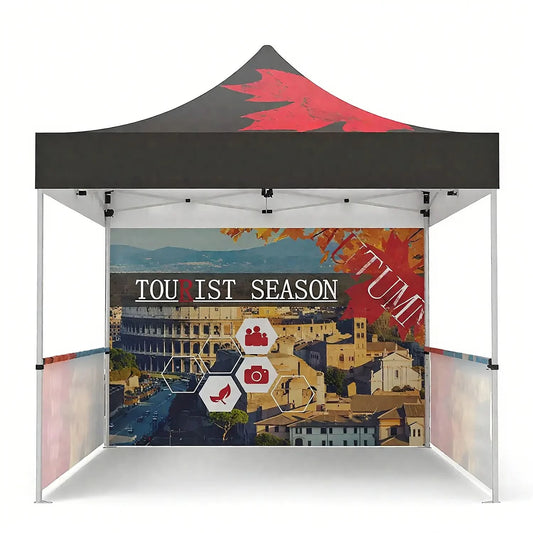
10x10 Custom Canopy Tent
A 10x10 custom canopy tent is a common choice for trade shows, vendor booths, and small business events. Portability and convenient setup are often important considerations for this size.
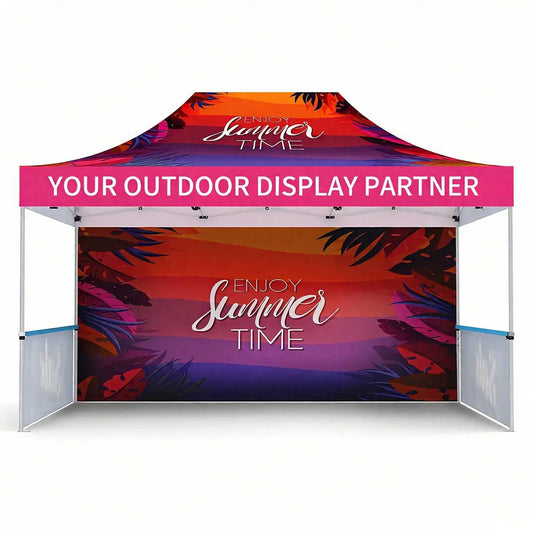
10x15 Custom Canopy Tent
A 10x15 custom canopy tent provides additional room for larger displays, promotional activities, equipment, and staff.
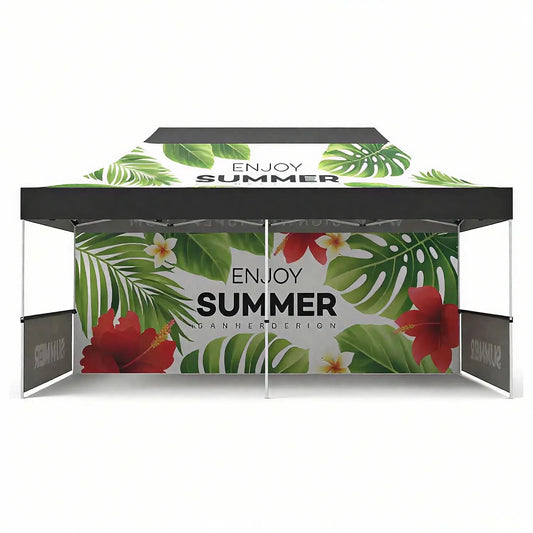
10x20 Custom Canopy Tent
A 10x20 custom canopy tent is suitable for larger commercial setups, bigger event displays, and branded spaces where structural design and proper anchoring are particularly important.
How to Choose the Right Custom Canopy Tent Frame
Before choosing between steel and aluminum, consider how your business will use the tent and what requirements matter most.
- How often will you transport the tent? Frequent transportation generally favors a lighter aluminum frame.
- How frequently will you set it up and take it down? Regular setup and teardown make weight and joint construction important considerations.
- Will it be used indoors or outdoors? Outdoor exposure makes corrosion resistance and surface treatment more important.
- How important is transportation weight? Small teams and mobile businesses may benefit from lightweight construction.
- What level of structural performance do you need? Compare tube dimensions, frame geometry, connectors, and manufacturer specifications.
- What is your budget? Compare initial purchase cost with expected usage, maintenance, and replacement requirements.
As a general guide, frequent transportation tends to favor aluminum, while a lower initial purchase cost may favor steel. The final decision should always be based on the complete frame specifications and intended application.
For a closer look at Pyrasun's Foundation, Pro, Premium, and Elite frame systems, see our custom canopy tent frame series comparison.
What Canopy Tent Buyers Should Ask a Manufacturer
Material names alone do not provide enough information to evaluate frame quality. When comparing canopy tent manufacturers, buyers should ask for specific construction details.
- What material is used for the frame?
- What is the tube wall thickness?
- What is the tube profile and dimension?
- What alloy is used for the aluminum frame?
- How are the joints and connectors constructed?
- What surface treatment is applied to the frame?
- Are replacement parts available?
- What anchoring or ballast system is recommended?
- What warranty applies to the frame?
- What applications is the frame designed for?
These questions can reveal more about real-world durability than the steel-versus-aluminum label alone. Two suppliers may both offer aluminum frames with significantly different wall thicknesses, alloy specifications, and connection designs.
Frequently Asked Questions
Is a steel or aluminum canopy tent better?
Neither material is universally better. Steel is generally more affordable and offers high structural rigidity, while aluminum is lighter and provides excellent corrosion resistance. The right option depends on your budget, transportation requirements, usage frequency, and intended environment.
Are aluminum canopy tent frames strong enough for commercial use?
Yes. Properly engineered aluminum frames can provide the structural performance required for commercial canopy tents. Their strength depends on the alloy, tube dimensions, wall thickness, frame geometry, and connection design. Buyers should review actual product specifications rather than relying on the material name alone.
Is a steel canopy tent heavier than an aluminum canopy tent?
Yes. Steel has a higher material density than aluminum. In comparable canopy tent configurations, aluminum frames are typically 20–40% lighter, although the actual difference depends on tube dimensions, wall thickness, and overall frame design.
Which frame is better for trade shows?
Aluminum is often the more convenient option for trade shows because it is lighter and easier to transport between venues. It can also make repeated setup and teardown less physically demanding for event teams.
Which canopy tent frame is better for outdoor use?
Both materials can be used outdoors when properly designed and maintained. Steel requires an appropriate protective coating to reduce corrosion, while aluminum naturally resists rust. For frequent exposure to humid or coastal environments, aluminum can offer a maintenance advantage.
Does aluminum cost more than steel for a custom canopy tent?
Yes. Aluminum frames typically cost more than comparable steel frames. The price difference can vary from approximately 30–80%, depending on material grade, tube thickness, frame dimensions, and construction specifications.
How long do steel and aluminum canopy tent frames last?
Typical estimated service life varies with product quality, usage frequency, storage, climate, and maintenance. Steel frames may last around 2–3 years under indoor or light-rain use, while aluminum frames may last around 5–10 years with regular outdoor use and proper care. These are general estimates rather than guaranteed service-life specifications.
Conclusion
Steel and aluminum canopy tent frames each offer advantages for different business applications. Steel is a practical option for buyers who prioritize a lower upfront cost and structural rigidity, while aluminum is often better suited to businesses that need lightweight transportation, frequent setup, and excellent corrosion resistance.
When comparing the two materials, look beyond the material name. Wall thickness, tube profile, frame geometry, connection design, surface treatment, and intended use all influence long-term performance. Choosing a frame based on these specifications will help you find a canopy tent that better matches your business requirements.
Get a Free Custom Canopy Tent Design & Quote
Share your logo and project details. Get a free 3D design preview and a personalized quote for your branded canopy tent.